The first thing you notice opening Upster is what it does not contain. There is no calorie ring. There is no leaderboard. There is no shop. There is a list of chairs with faces, a streak counter, an interval picker, and a quiet-hours toggle. The minimalism is not a stylistic choice; it is a thesis. Upster's designers believe the failure mode of every previous reminder app is doing too much, and the design discipline behind the product is a sustained effort to do less.
The bet: emotion beats information
Every desk worker over thirty has read the studies. Sitting too long is bad for the heart, the back, the hips, the metabolism. The information is widely distributed and largely ignored. The Upster team's read of the situation — informed, they say, by a close reading of behaviour-design literature — is that the bottleneck is not knowledge but emotional salience. People do not change behaviour because of a statistic. They change it because something has been moved out of the abstract and into the felt.
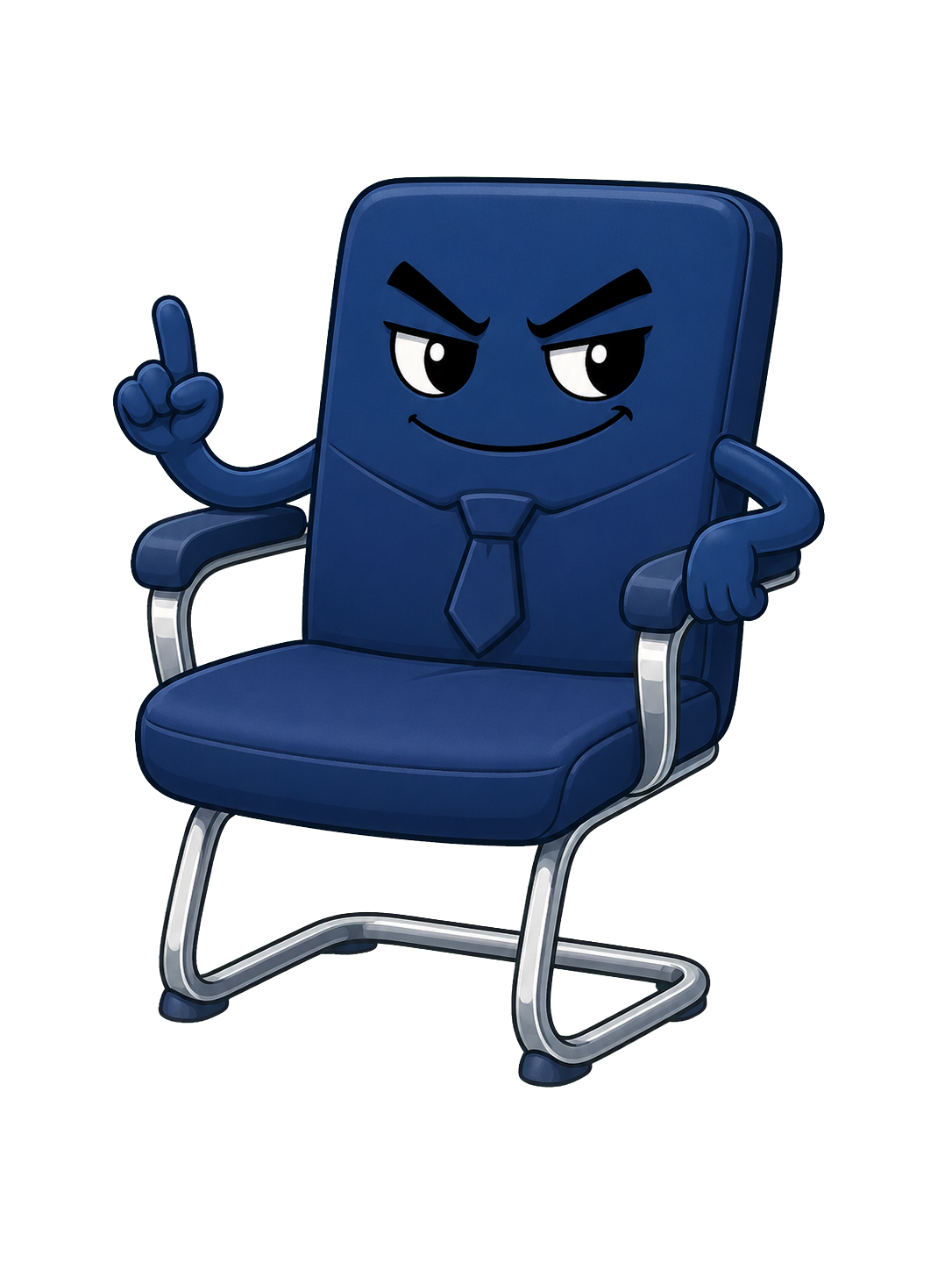
Hence the chairs. By giving each chair a face, a name, and a small piece of taunting dialogue, Upster turns "you have been sitting for forty-five minutes" — a sentence the brain edits out — into "Spin Doctor has you in his clutches", a sentence the brain notices. The transformation sounds silly written down. In practice, users in the closed beta reported being motivated by it within a week.
The literature it draws from
The intellectual lineage is not hidden. Upster's design choices map cleanly onto well-known habit-formation research. From BJ Fogg's Tiny Habits work at Stanford, the app takes the principle that behaviour is most likely when motivation, ability and a prompt converge — and that the prompt has to be external, because internal motivation is unreliable. From operant-conditioning research it takes the use of variable reinforcement: a different villain each interval, the way a slot machine pays out unpredictably, to keep the cue from going stale. From streak-based apps like Duolingo it takes the intrinsic reward of an unbroken count, with the lesson — applied carefully — that streaks must have a forgiving recovery window or they backfire.
The novelty is not in any single mechanism. It is in the choice to apply all of them to a single, narrowly-defined behaviour: standing and moving every 30 to 60 minutes during the work day. Upster does not try to optimise sleep, water, calories, or steps. It does one thing.
Why the chair-villain universe matters
The chair-villain catalogue is the product's strongest creative bet and its biggest liability. The team has illustrated dozens of chairs — papasans, dining chairs, conference recliners, tulip chairs, ladderbacks, ball chairs, bus seats — each with a name and a personality. Chill Thrill is the wobbly papasan. Snap Judgment is the polite-bully dining chair. Spin Doctor is the conference-room tyrant. Mod Squad is the tulip chair that thinks it is too cool for you.
The catalogue gives the streak something to be a streak of. Defeating "ten chairs in a row" is more memorable than completing "ten movement breaks", in the same way that defeating ten Pokémon is more memorable than catching ten generic creatures. The risk, the team acknowledges, is catalogue staleness: the cast must keep growing or the framing wears thin. The roadmap commits to a steady release of new villains as part of the core free product, not behind a paywall.
The engineering restraint
Less visible but more important is the engineering restraint behind the cartoon surface. Upster does not fire during calendar meetings. It does not fire during user-defined quiet hours. It does not fire while the phone is in active use on a call. It does not send the same villain twice in a row. It does not nag if it can detect that the user has clearly already moved. Each of these constraints exists because the failure mode of a reminder app is not "the user did not see the notification" but "the user saw too many notifications and learned to ignore them all". Building a respectful notifier is harder than building a noisy one. Upster's product team has clearly chosen the harder problem.
The same restraint shows up in the data the app collects. There is no social graph. There is no friends-list pressure. There is no leaderboard. The streak is private. The team's stated view is that for this particular habit, social pressure is more likely to produce shame than behaviour change, and shame is a poor long-term motivator. Most habit apps disagree. Upster has chosen to be the dissent.
What the long game looks like
Upster's ambition is narrower than most wellness apps and, paradoxically, harder. The team is not trying to be a generic health platform. They are trying to be the default product for one specific behaviour — standing and moving every 30 to 60 minutes during the work day — for as many desk workers as will let them. If the chair-villain framing wears in instead of wearing out, if the streak system motivates without punishing, if the notification engineering stays restrained as the product grows, the app could become the category-defining product for movement breaks the way Headspace became one for meditation. If any of those bets is wrong, it will be a charming app that did not change the category. Two weeks of testing will not tell you which one Upster ends up being. Two years probably will.
Source: BJ Fogg, Tiny Habits (Stanford Behavior Design Lab). External cues, anchored to existing routines, are the most reliable mechanism for behaviour change. Willpower is unreliable; design is not.
Read more: the launch announcement, the two-week hands-on review, the plain-English explainer, a deeper look at why most reminder apps don't work, or just the home page and how Upster works.